Thursday, August 1, 2019

Understanding Wellness Disadvantage: Smoking


Screenshot of HHS.gov World Lung Cancer Day post on Twitter
The well-intentioned Twitter post that inspired this post.
You may be aware that I was inspired to join the health professions after my father died of lung cancer at 58. I have a theory on why lung cancer is and has long been the number one cancer killer.

Patients who smoke are subjected to medical bias & neglect for years pre-diagnosis under the erroneous assumption that they don’t care about their health. It is an easy assumption to make, and during my father’s illness I saw it in medical professionals of all kinds. Since then, in 6 years of education & clinical training, I have seen it come up again, and again, and again — with devastating impacts.

It isn't hard to understand why medical professionals exhibit bias toward smokers. It is a key risk factor or cause for a panoply of illnesses.

What is much harder to understand is why so many people still smoke. 


Why, even after it begins to cause problems, do so many people keep smoking and bat away nudges to quit with seemingly nary a thought? As a former smoker celebrating 8 years smoke-free this December, I can tell you.

Because quitting smoking is really hard!

And unfortunately, starting smoking is very easy, especially for young, impressionable folks with limited coping skills, or no support. When you’re young that rush of excess nicotinic activation feels like profound relaxation. Calm.

There is nothing that calms you down faster or more reliably than that first drag on a cigarette. Even though the longer you smoke the less good it feels, it becomes a crucial, quick-acting coping mechanism that is extremely hard to replace.

When you try to quit, it’s hell.


It’s like an evil gremlin lives in your mind and never talks about anything except smoking. The longer you’ve been smoking in pack years, the louder he is. Medications like Wellbutrin can help with the gremlin, but as with so many things medical, cost & access are a problem. Besides the gremlin, without medication or nicotine replacement you rapidly start to feel like an insane person. By the afternoon of the first or second day you are grouchy in a way that is almost impossible to control (ladies, think the worst PMS ever) and snapping at everyone.

People who love you and who you love back will literally ask you to smoke. 


That sounds ridiculous, right? Who would do that? Unfortunately, it happens all the time. The first time I ever tried to quit — just a few months after my first cigarette — my boyfriend got so sick of my attitude he asked me to please smoke a cigarette. Up until that moment, I didn’t even know what a “nic-fit” was, but you better believe that at eighteen years old when I heard that the reason I had been feeling like a murderous psychopath all day was simply for lack of one little cigarette, I lit up faster than you can say “No shit?” After all, I didn't smoke that much. I wasn’t really addicted, I could quit any time.


Yes, so dumb, but that's what I thought. via GIPHY

I kept smoking for eleven years and during that time I heard and was told hundreds of times how bad it was to smoke and how stupid it was and oh my gawd how can you stand the smell of it, but you know what no one ever told me?

That the nicotine rush I was experiencing was hypertension.

That every time I lit up, I was inducing a stress reaction in my own body that was intended to prepare me to remain calm while I did whatever was necessary to survive attack.

That this same stress reaction was smashing every bit of cholesterol in my blood into the walls of my arteries with every single heartbeat.

That the reason I coughed was because the tissue in my trachea had adapted to the constant assault of cigarette smoke by literally mutating into a different kind of tissue that couldn’t move anything out of my lungs without the assistance of a cough.

We don’t talk to smokers.


At least, we don’t talk to them like intelligent human beings who can understand & mitigate the consequences of their own actions when empowered with the knowledge all medical professionals must earn/maintain/update via enormous personal and financial sacrifice. We talk to them like losers who already understand perfectly well why they don’t feel good and choose it because god-knows-why-not-my-problem.

IT IS BULLSHIT.


Stop telling people smoking kills you. NO SHIT. WE KNOW.

How about instead you tell us HOW to slay the gremlin? How about you take the time to explain to a smoker who may come from a family with absolutely no energy or resources to spare toward wellness because they are just trying to survive exactly what is happening inside their bodies and why it is that "everyone says" smoking is bad.

This is basic Maslow’s hierarchy of needs, and we have all been educated to know better. It is our responsibility as healthcare providers to use that education to help our patients as much as we possibly can, even if we have our own gremlins with nasty things to say about smokers. Step one is admitting the gremlins exist and they are influencing our behavior. Step two is doing something about it. Congratulations on finishing this read instead of clicking away the first time you saw yourself in it. Your step two has already begun.


This content has been edited and supplemented from it's original format here and republished as a blog. 

For more content by Kelly Clark, DPT, PT, MT, visit PT For The People's sister LLC, Patient PT. 

Saturday, February 16, 2019

Shameless Plug: My Guest Blog on The Pulse

A few weeks back I had the honor of being published to the American Physical Therapy Association student news site, The Pulse.

I wrote a blog about my experience joining the physical therapy profession at a later stage in life than most, and why I think that physical therapy as a profession benefits from the voices of practitioners from all different backgrounds, just as our patients come from all different backgrounds. Check it out here!

Screenshot and Link to Five Things I Wish I'd Known Before Starting PT School
Click to View

Sunday, January 20, 2019

Defining Wellness Disadvantage

Wellness Disadvantage:
A complex set of interrelated factors that combine to confer a lesser likelihood of objective health and wellness for a given patient.

I was having lunch with a fellow healthcare professional when they asked me if I remembered how much a certain patient weighed. It was at an inpatient facility, so weight was a standard metric the appeared at the top of most of the documentation. I replied that I thought it was around 450 pounds. To this the colleague replied, “Is that all? I really thought it would be more.” I had a feeling I knew where the conversation was headed and made a neutral comment about height and laying in bed making it difficult to guess at patient weights. A moment passed and then came, “I just don’t understand how a person lets that happen.”

2006 
When I first started physical therapy school in 2016, I felt very intimidated by my classmates. Most healthcare providers use BMI as a shorthand method to define a person’s size and, often, relative health. A BMI of 25 or greater is considered overweight, but in defiance of U.S. obesity trends, perhaps five or six of the 42 people in my class were clinically overweight.

By contrast, I was class III morbidly obese and the heaviest I had ever been, despite having successfully lost over 100 pounds ten years prior. During that decade of seemingly relentless weigh gain, I moved to a new state, quit smoking, lost my father, switched jobs twice, and went back to school full time to get a professional doctorate.

Both despite and because of changes and progress in other areas, I had put on over a hundred pounds since my personal fitness peak at 26. 


Of course, it wasn't 100 pounds overnight. The first time I decided I needed to do something about my growing waistline in 2008, I was only up by about 20 pounds. Between 2008 and starting PT school in 2016, I tried diets, fasting, running, consulted three different doctors and two psychologists, and went through one prolonged but ultimately unsuccessful bout of attempting to accept myself as I was -- but nothing made a difference as year after year my weight slowly climbed. Expert after expert encouraged me to lose weight as a seeming panacea for all my problems, but after all the time and energy I had already dedicated to simply trying to stop gaining weight, I felt deeply hopeless.

2016
During that first, worst semester of PT school in the August heat of the Midwest, I became soaked in sweat walking to classes from the parking garage. My ankles had started to swell every day and I couldn’t wear most of my shoes. Everything from finding a desk that I could fit inside to completing the functional movement screenings during labs to walking from class to class was hard for me, and the consensus was that is was because I was unnecessarily carrying at least 100 pounds more, on average, than anyone else.

As I watched my classmates going through the same brutally long days of professional school -- all of them young, most of them thin, many of whom ran for miles every day, and one of whom had been at Olympic training camp as a triathlete only months before -- I didn’t resent my classmates for their athleticism. I knew they had earned it with hard work and discipline that I could only goggle at --but it was impossible to ignore that as far as getting through my day-to-day was concerned, I was at a serious disadvantage.

Post-class, pre-workout swelling lines
During winter break at the end of 2016, I decided that despite how impossible it seemed I simply had to do something about my health. Though I felt deeply ambivalent about believing that my weight was the origin rather than a symptom of all my problems, I committed to losing weight mainly because it was the only solution to my health problems on offer. I joined a nearby fitness facility where one of my more athletically-inclined classmates worked out. I downloaded MyFitnessPal and started tracking calories. I made a calendar to track the days I exercised and met my calorie goal. I set a goal to drink a half ounce of water for every pound I weighed and worked up to it until it felt normal. I took unflattering, mean-girl selfies at the gym and made before/after Pic-Collages when I hit milestones. I put pictures of my thinner self on the refrigerator and in the edges of all the mirrors.

I ground out 25 pounds of weight loss like my life depended on it, because by then it felt like it did.


After I started working out, my feet and ankles were no longer content to simply swell every day, and instead they ached constantly, deep in my bones, keeping me awake at night. Despite of my weight loss, my blood pressure had recently climbed to 140/90 at rest and my blood sugar still hovered at it’s elevated, pre-diabetic A1C of 5.6. My face was bright red any time I was moving or the slightest bit nervous, and my skin had started to break out unpredictably. I was getting discouraged, but felt determined to keep trying. 

Fortunately, in the summer of 2017, I got a new primary care provider and was finally diagnosed with two common vitamin deficiencies – B12 and D3 -- that were causing my most painful, debilitating, and frightening symptoms – including two falls I could not explain except to say that I had been walking and then suddenly falling.

These problems might have eventually rendered me unable to walk if my physician hadn’t taken the time to listen to me and try to understand why I felt so poorly at such a young age. 


Now I take a few vitamins every morning and I feel like a normal person again. I haven’t lost all the weight yet, but I’m down 45 pounds overall and still working on it. I'm happy I lost it, but I'm still mad so many people I trusted to know better tried to tell me that it was the cause of all my problems.

Though my weight was a pretty obvious source of unhappiness and stress on my body, losing it never would have made me feel any better because it wasn’t the source of the problem.  


Thanks to all the calorie-counting, I have a pretty solid answer to the question "How did this happen?" when it comes to chronic, avoidable, and grossly neglected health problems; because I once wondered how on earth I let it happen to myself. Though the difficulties I faced in locating an empathetic health care provider were an enormous factor in my long illness, I still spent a very long time blaming myself and my own lack of self-control. Once, in an effort to quantify my own seeming negligence in managing my weight, I once calculated how many calories I would have had to consume over the span of a decade in order to gain a hundred pounds.

100 pounds of weight gain
x
3500 calories
=
350,000 calories


350,000 calories
/
10 years
=
35,000 calories per year


35,000 calories
/
365 days
=
95.9 calories per day

96 extra calories per day is all it would take. 96 calories – less than a single pat of butter – can turn into 100 pounds and morbid obesity. As I watched my colleague shake their head, baffled at how a 450 pound patient comes to be, I had to make a decision about what I would say. How does one communicate this complicated concept in an empathetic way?

How can I help my fellow healthcare practitioners understand and help morbidly obese patients when so often the conversation stops with that shake of the head?


I took a few moments to talk to my colleague about how difficult it can be as an obese patient to get help with healthcare problems when admonishments to lose weight so often replace medical advice long before they reach an inpatient facility. I did not say anything about what I silently suspected was underlying disdain and disgust toward the patient (and thereby, unbeknownst to them, myself). I knew they were a professional and would never overtly show those feelings to a vulnerable patient. But what about the messages those attitudes might communicate to a vulnerable patient nonetheless?

Even when said silently to oneself, to ask “How did this happen?” without seeking any specific answer is an admission that one doesn't really want to know. I have heard variations of that question on the lips of many and more types of healthcare professionals than I care to discuss, and almost all of them are directed toward patient populations whom I view as disadvantaged. From a provider standpoint, patients with morbid obesity, patients who smoke, patients with metabolic disorders like diabetes,  and those who admit to alcohol and drug abuse all appear to be ignoring obvious solutions to their health problems, and healthcare professionals often can’t even guess why because they can’t relate.

I can relate because I’ve been there. I’ve been morbidly obese. I was a smoker for eleven years. I was pre-diabetic. I grew up in a rural area with limited access to healthcare. I know the answer. 


It happens because a 60 billion dollar weight loss industry can buy enough influence to ensure that a whole lot of people with no reason or experience to tell them otherwise believe that maintaining a healthy weight is something that is hard to do and requires them to do odd, difficult, expensive, and often painful things.

Not everyone grows up with the advantage of a mother who is there when they get out of school to give them a ride to soccer practice or a snack or help with their homework. Not everyone lives in a smoke-free home or knows how it feels to breathe clean, clear air every day. Not everyone has easy access to modern healthcare facilities, safe schools, or clean drinking water. Not everyone can just lace up their shoes and go for a run in their own neighborhood. Personal wealth, access to support systems, geography, ability, family history, representation, race, religion, language, nationality, gender, class -- these are the factors that lead to some people having an advantage when it comes to wellness, and some having a disadvantage.

The differences that lead to health inequity and wellness disadvantage aren’t insurmountable. Healthcare providers want to help their patients be healthier, and patients want to feel better and be able to do more with their lives. If patients and practitioners alike recognize the deep complexity of the differences between well and the unwell, we can begin to work together to ensure everyone has an equal chance at health and happiness.

Sunday, January 6, 2019

My First Wellness Poster: Diabetes

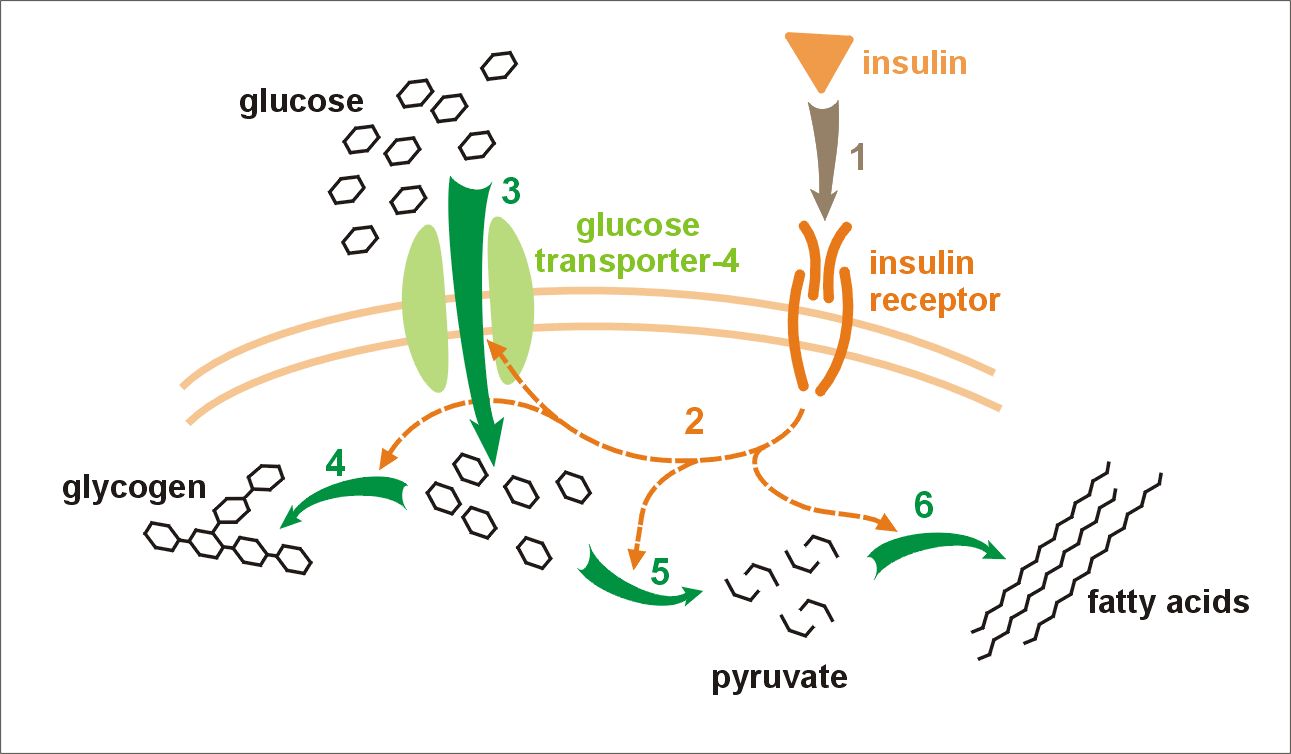
A poster explaining how diabetes works in patient-friendly language
Click to view larger
My first brush with patient advocacy from the medical community standpoint came in the form of a project I did for a class during undergrad. I was mostly working on prerequisites for physical therapy, but they are intense classes (anatomy, physiology, physics, chemistry, biology, the works!) that most people only take one or two at a time to ensure they get high enough grades to get into PT school (which basically means all As all the time). One semester I decided to take a class called "The Pathophysiology of Human Disease," which was taught by Dr. Douglas Carr, MD.

Dr. Carr explained that medical training was undergoing some changes and that there was a big push toward empowering patients to maintain better health through education. The class covered three common medical conditions in detail -- diabetes, breast cancer, and heart disease. We talked about the history of the condition, how it was diagnosed, how it worked from a physiologic standpoint, what the complications were and how they developed over time, and how they were managed from a medical and patient standpoint. There were even patients with each of the conditions who came in to talk to us about their history and answer questions for us. All of this was in preparation for a project in which we were to design a poster intended to educate a patient newly diagnosed with one of the three conditions, and we could choose which one.

I selected diabetes, and along with my score Dr. Carr sent me an email that I still have, in which he said it was clear that I had a good understanding of how these things worked and recommended that if I ever thought about becoming a medical doctor, I should come and talk to him. That kind of reinforcement and encouragement has been scarce in my life, and I was deeply touched by his kind words. I later asked him to write a letter of recommendation for my applications to physical therapy school, to which he graciously agreed. All of that was four years ago now, and every time I work with a patient who has diabetes I think about that class and Dr. Carr and all the things I learned.

It is my hope that eventually as I continue to add content, this blog will become a valuable resource both for people who want to understand and improve their health and for healthcare providers who want to understand how they can better help their patients. In that spirit, here is the first original resource I'll add to PT For the People.

SOURCES

List of terms used on ingredient labels for sugar:
IU Health Diabetes Center:
http://iuhealth.org/bloomington/diabetes-center/
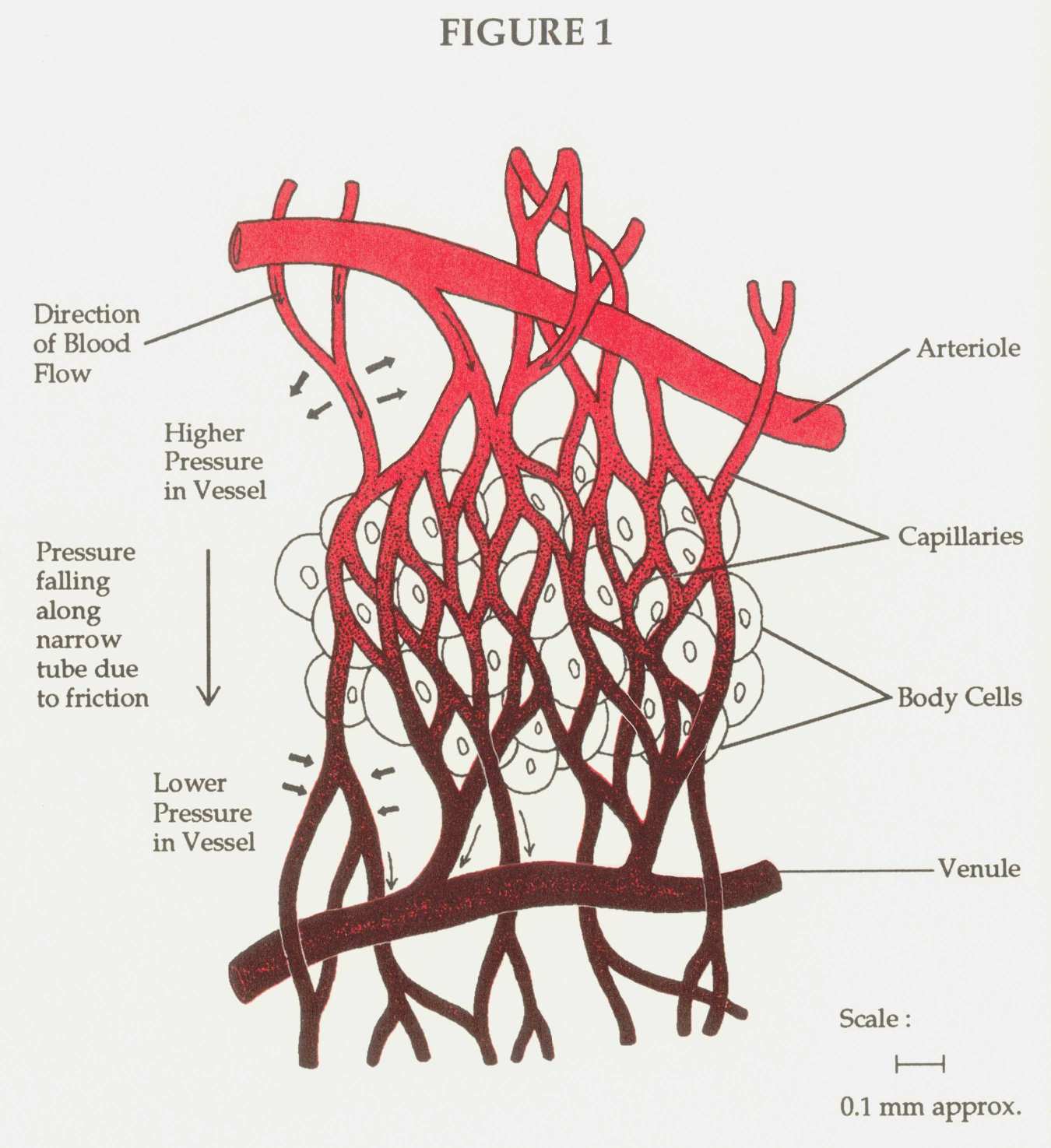
Capillary bed:
Brain image modified from:
http://i.kinja-img.com/gawker-media/image/upload/s--VQCwnqwV--/17phitxlpacecjpg.jpg

All other images sourced from public domain images available via office.com or created by poster author Kelly Clark.
All information sourced from text & class pack for MSCI M 485, Spring 2015 at Indiana University Bloomington.